dagboekfragmenten van MUN'ers

10/03/2017
🖋: 
Auteur extern

Jonas Van Orshoven, Joseph Steimetz, Joyce Ibens en Pauline Theunis


Let Trump, Poetin and Merkel for what they are. What if students rule nations and have to negotiate on an international level? Model United Nations in a nutshell. From the 9th untill the 12th of March the Hof van Liere is once again the background for inspiring speeches, mysterious back-room politics and a crowd of brilliant students, the world leaders of tomorrow. They negotiate about the hot potatoes in international politics, without forgetting the diplomatic parties.

dwars got hold of the diary of four MUN'rs: will Jonas and Joseph succeed in bringing the UN Security Council to a world without atomic weapons? And what about Europe? Do Joyce and Pauline see to more gender equality and prevent forced labour and slavery?

Joseph Steimetz   (Ambassador of the President of the USA)

My name is Joseph, I’m 23 years old and I am competing in this years lustrum edition of the AnwerpMUN. This is in fact the second time for me to join the AntwerpMUN and as a good bottle of wine, as it gets older, it gets better!


I have the honor of being the representative of the United States of America for the United Nations General Assembly and I’ve been asked to write down a small summary of how my day has been and what is going on in a MUN. So where should I start?


Maybe I’ll just start by explaining the topic of our committee, which is briefly the context of nuclear weapons in international politics.


We started the day with the official opening of the AntwerpMUN 2017 with speeches given by the president of the AntwerpMUN organization and the vice dean of the university of Antwerp. Once all of that had passed we started with the actual committee session.


I must say, during the first half, the committee was quite sleepy or quiet. There weren’t too many motions or points being passed by to the chair. Nevertheless it was still a very intense and fruitful day, with a lot of notes being passed around. When I received the email stating that I had been selected in representing the United States of America at the UNGA (United Nations General Assembly), I imagined I’d be receiving plenty of notes, but I did not expect it to be that many! Most of the time I was just sitting there and replying to all of the notes I have received from almost every delegate in the room.


The plan of the United States together with Russia and all of the other nuclear powers, is to come to an agreement on the possible further non-proliferation and gradually strive to a mutual partial disarmament between all of the nuclear powers. I must say, we are taking the first steps towards actually achieving that, but the MUN has just started and we still have a long way ahead when it comes to working out in detail the conditions of that agreement.


As I’m writing this summary I’m nearly falling asleep from fatigue after all of the work we have done today. But I do so, with a smile as big as our (USA) president’s ego, which says a lot of how big it is.


So far day one out of four has ended, looking forward to the rest of the MUN. Let me just finish with a quote by President Trump: “Let’s make AntwerpMUN great again!”


Jonas Van Orshoven   (Ambassador of Russia)

The first day in the General Assembly was characterized by a lot of testing the waters, and delegates trying to find allies for the different goals they have for this four-day session. This resulted in a somewhat chaotic and unstructured start. We held a lot of informal debates to enable delegates to discuss issues more freely with each other in little groups, but this also fragmented the debate, as some groups focused on other issues than others. The chairs are trying their best to guide the less vocal delegations into actively sharing their opinions, because a lot of debates aren’t as polarized as you would expect for a first day. Maybe some delegations will take tonight as an opportunity to do more research to support their arguments and statements.


As soon as an opportunity presented itself, I started working with the delegations of China and the United States to address the nuclear-sharing missions that place nuclear weapons in countries that don’t possess nuclear technology. This proved to be quite fruitful and we succeeded in finding some common ground on the topic, which the other delegations in the committee seemed, at least for now, to approve of.


The delegate of Australia, however, has proven to be particularly tough and, especially during informal discussions, seems to find it very undesirable to diminish the range of the US’s ‘nuclear umbrella’. I should be able to come up with a solid strategy to either keep them happy or focus on other things during the informal discussions.


From what the first day of discussions has taught me, a lot of the non-nuclear States will try to impose inspection obligations on the nuclear States and in particular Russia and the USA. As a matter of fact, Russia and the USA already carry out inspections on each other’s territories so there is no need for an extension of the inspection regime under the Non-Proliferation Treaty.


My arguments to that effect, seemed to fall on deaf ears and it looks like some of the non-nuclear States will try to form a bloc against the nuclear States. I hope these delegations don’t forget that Russia, as well as the US, has a veto in the Security Council so any resolution that doesn’t incorporate our concerns on the matter, will carry little weight in there.


So, a major point that I expect to be raised tomorrow is the fact that the Non-Proliferation Treaty does not provide inspections in nuclear-weapon States. Although I understand this can be a sore spot for those States, it is not in the best interest of the Russian Federation to give up this much of its national sovereignty on a crucial military issue. This is a point in which I stand united with the USA, which is one of the more vocal delegations in the committee. We should be able to hold the other delegations off for the next few days, but it might cost us a lot of goodwill for other topics in which we would like to achieve progress. But tonight we have a pub crawl planned, so that might be a good opportunity to gain some allies for the next few days!


Joyce Ibens   (President of Romania)

Today I woke up as the head of state of Romania – up and ready to discuss important matters with my fellow members of the European Council. On my way to our location where the committee sessions are to be held, I encountered a colleague: the Prime Minister of the Netherlands. Together we chatted a bit and upon arrival we registered. After the opening ceremony, our debates could officially begin.


For the next four days we are to discuss on how to implement gender equality in the European Union, institutions and society. Moreover we will exchange views on some clear pervasive problems such as countering modern slavery and forced labour in the EU. Before lunch break we got comfortable with the subjects by all stating our own personal stances on the issues and by elaborating on future measures to be taken. We talked about very diverse subjects such as the effectiveness of quotas implemented to give preference to women on the work force, both institutional as in private companies. Consequently we examined on how we could improve the educational system in favour of horizontal gender equality.


Afterwards we enjoyed a delicious lunch at the Komida but we did not hold off on further discussions. On the contrary, gender equality lead to some heated conversations while eating. After our lunch we continued on other matters such as gender-based violence and human trafficking where women remain a vulnerable social group. The majority of the heads of states complied on working together as a strong force, as a community in order to erase illegal criminal activities that affect vulnerable social groups. Hungary took a stance by saying they wanted to close the borders and raise border controls, but there was no consensus in the council on this proposition.


We took a small break, where me and some other delegates enjoyed the opportunity to get some fresh air. Together with the heads of states of Belgium, Luxembourg, Greece and Austria, we acknowledged that we wanted some structure in our agenda for the next days. After our break, during the follow-up session we all agreed upon to reform our agenda in order to have a clear overview on what should be discussed today and the following days.


Later a heated discussion emerged between the Netherlands and myself forming a similar opinion and Belgium and Austria on the other side. I completely agreed with the Netherlands that there should be a revision of the paternity and maternity rights, where parents could decide themselves on how to plan their leave before and post birth. Eventually we worked out a resolution on the sensibilisation of gender roles by funding awareness campaigns. There was a clear consensus that this was necessary in order to change the mentality in gender equality.


At the end of our sessions, we all decided to table the subject to tomorrow morning in order to come to a distinctive resolution on the subject. But besides those serious matters, it was time to let our hair down. All fellow delegates of the European Council, General Assembly, The World Trade Organization and the United Nations Security Council will enjoy a pub-crawl tonight! Lets hope we will be energetic enough tomorrow to continue our committee sessions.


Pauline Theunis  (President of Slovenia)

De first day of the Antwerp MUN is just behind us. After the opening ceremony everybody immediately threw themselves into the negotiations. Since Slovenia has already devoted itself enormously when it comes to gender equality, it shows in the results. With an eighth place we have already achieved a lot in closing the gender gap. However, in the statistics one other country stands out: Finland. Every country can learn from what they achieved in recent years. Today we discussed the usefulness of quotas, human trafficking, the equalization of paternity and maternity leave and as a consequence, I was expecting a from Finland, since they already found a lot of solutions back home. Unfortunately, Finland remainde rather silent.


Perhaps because we started debating at random without structuring our points of discussion. As this was evident to every representative, in the afternoon we were able to agree on the items to be schudeled on our agenda for tomorrow.


Convenient, because now everybody is able to read up on the topics. Hungary arguably has worked itself in the spotlights today, since it presented itself as a country where traditions and traditional role patterns still take priority over gender equality. Apparently they don't want gender quota, but do want to pursue gender equality in other ways. Alternative proposals, however, were never formulated.


Hungary also pointed out that they are often the source of human trafficking and that they would like to receive (financial) support from other countries in tackling this problem. In Slovenia, this is less of a problem, but as human beings is obviously not confined to national borders, we are certainly willing to reach out. Also Luxembourg gave it's opinion when they joined me, representing Slovenia, when I pointed out the problem of horizontal and vertical segregation in the labor market. To us this is still a significant problem as only one third of the senior positions is filled in by women. Hungary came with a possible solution: focussing on the education system and rouse their intereset for the industrial sector as they often choose the services industry.


Another perspective on the issue came from Lithuania. It stated that the discussion is often focussed on women, thus covering only half of the problem. Men can be encouraged too to work in the services industry and to help women. Because we support the 'HeforShe' campaign, indeed encouraging men to support women, we could only agree. Belgium with a good solution as well: the eradication of stereotypes in education. A man can be a nurse as well as a women can be a sturdy construction worker. In short, food for thought.
opinie

10/03/2017
🖋: 
Auteur extern

Laura Buyssens


Vijf jaar studentenvertegenwoordiging heb ik achter de kiezen. Vijf jaar en ettelijke keren met de neus tegen de muur lopen. Het is immers niet vanzelfsprekend om een goede balans te vinden tussen én een goede studentenvertegenwoordiger (stuver) zijn én een goede student. Naar welke kant de balans overhelt, is een persoonlijke keuze. Wanneer van hogerhand echter restricties op deze keuze worden gelegd – met name door het opleggen van verplichte aanwezigheden – kan de vraag gesteld worden in welke mate een geëngageerde student nog bewegingsvrijheid heeft. Het staat buiten kijf dat wanneer je je kandidaat stelt, je enkele verplichtingen aangaat. Maar moet dit ten koste gaan van je studie? Mogen en kunnen we nog een leven hebben naast ons engagement als stuver? Wordt onze inzet bovendien enkel bepaald door het aantal uren dat we in vergaderzalen spenderen?


Ik stel vast dat stuvers van verschillende campussen zich moeilijk in elkaars schoenen kunnen verplaatsen.


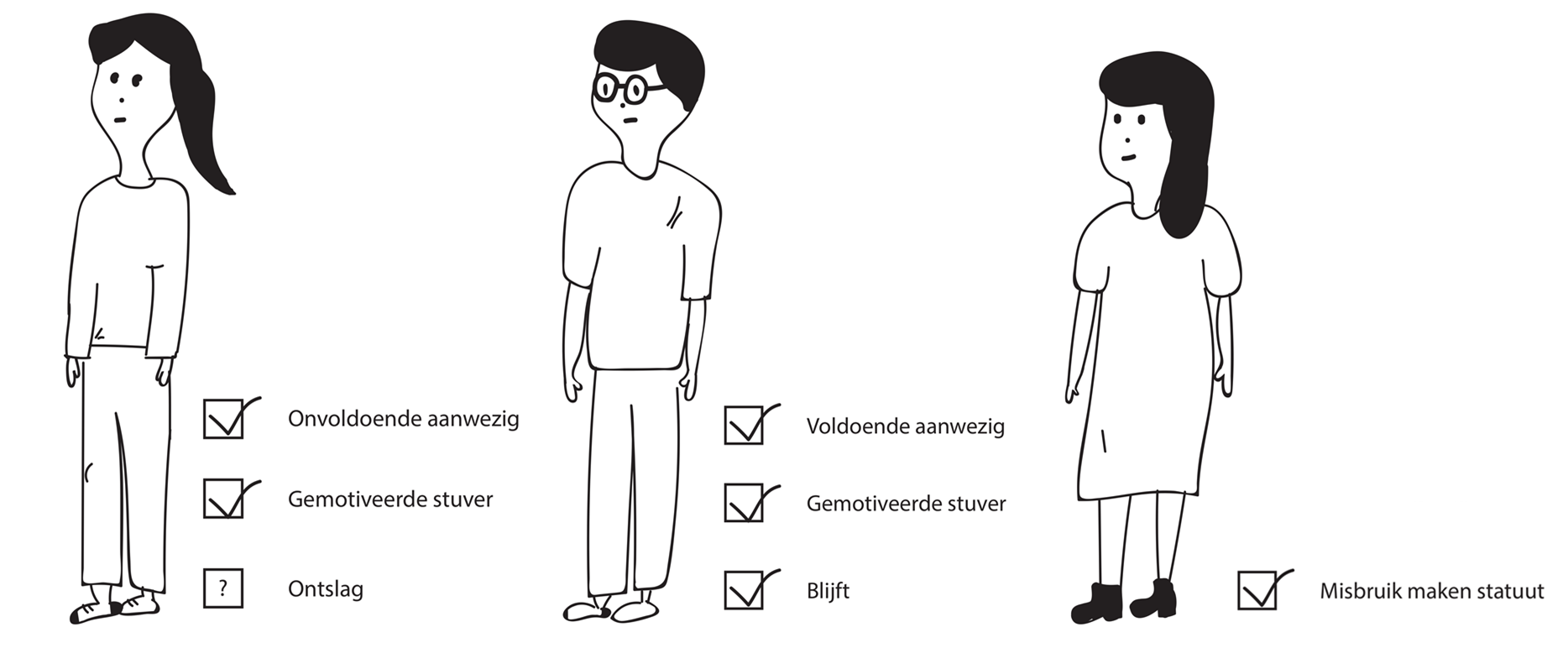
Het statuut van de studentenvertegenwoordiger zou een oplossing moeten zijn om dit balanceren gemakkelijker te maken. Dankzij dit statuut krijgen stuvers immers de mogelijkheid om lessen te verlaten om hun manda(a)t(en) ten volle te kunnen uitvoeren. De invoering van het statuut is inderdaad een welgekomen ondersteuning, zeker voor studenten die meerdere mandaten op zich nemen. Wat naar mijn mening echter niet voldoende in rekening wordt gebracht, zijn de verschillen tussen de opleidingen. De ene opleiding heeft meer flexibiliteit en bewegingsvrijheid dan de andere. Daar waar sommigen gemakkelijk een uurtje vrij kunnen maken, is het voor anderen telkens een gepuzzel om aanwezig te kunnen zijn op die ene belangrijke vergadering. Opleidingen waarin verplichte practica aan bod komen, kunnen bijvoorbeeld niet of slechts gedeeltelijk gebruik maken van het statuut. Zo hebben deze stuvers het recht om lessen te missen, maar moeten verplichte practica wel gevolgd worden. Bijgevolg kunnen deze studenten niet altijd en overal aanwezig zijn. Dit fenomeen blijkt binnen de groep van stuvers niet altijd even goed begrepen te worden. Ik stel vast dat stuvers van verschillende campussen zich moeilijk in elkaars schoenen kunnen verplaatsen. Wanneer problemen over aanwezigheden worden aangekaart, wordt maar al te vaak met het statuut gewapperd, terwijl het niet altijd van toepassing is.


Laten we goede stuvers vertrekken omdat ze – al dan niet moedwillig – te veel hooi op hun vork namen?


Samen met enkele collega’s stel ik mij bovendien de vraag of aanwezigheid werkelijk een maatstaf is voor de betrokkenheid van de stuver. Zijn de uren die je buiten de vergaderingen in je mandaat steekt niet minstens even waardevol? Voorbereidend werk en contacten met professoren (zeker op opleidingsspecifiek niveau) zijn niet te onderschatten. Dit in het bijzonder voor stuvers die vaak drie of meer mandaten (vaak op verschillende beleidsniveaus) moeten zien te combineren. Het was dan ook een slag in het gezicht toen ik las dat de Studentenraad stuvers die naar hun mening niet genoeg aanwezig zijn, wil bannen van de kieslijst voor volgend academiejaar. Moeten studenten daadwerkelijk bestraft worden omdat ze misschien één van hun vele mandaten niet kunnen bolwerken? Laten we goede stuvers vertrekken omdat ze – al dan niet moedwillig – te veel hooi op hun vork namen? Zou men in de eerste plaats niet beter op zoek gaan naar de oorzaak van afwezigheden in plaats van onmiddellijk te oordelen en vergelijkingen te maken met anderen? Dit blijkt een moeilijke oefening te zijn, waarbij individuele gevallen op weinig bijval kunnen rekenen. Ik vind dit bijzonder jammer. Ondanks goede bedoelingen krijgen sommigen het etiket opgespeld ‘niet geëngageerd’ te zijn, terwijl het tegendeel waar is. Communicatie is naar mijn mening de oplossing, maar dan wel langs twee kanten. Meer begrip en nuance voor de stuverwerking binnen de verschillende faculteiten is wenselijk, verdeeldheid is immers niet de oplossing.


Laura Buyssens – 2e Master Biomedische Wetenschappen

Gedurende mijn hele opleiding ben ik op alle mogelijke beleidsniveaus actief geweest als studentenvertegenwoordiger. Zowel op opleidingsspecifiek niveau (onderwijscommissie BMW, faculteitsraad FBD en CIKO-raad) als op centraal niveau (Studentenraad en Raad Dienstverlening) heb ik getracht mijn steentje bij te dragen. Het is nu tijd om de fakkel door te geven aan nieuwe, gedreven studenten die op gepassioneerde wijze hun medestudenten zullen vertegenwoordigen.


dagboekfragmenten van MUN'ers

09/03/2017
🖋: 
Auteur extern

Jonas Van Orshoven, Joseph Steimetz, Joyce Ibens en Pauline Theunis


Laat Trump, Poetin en Merkel voor wie ze zijn. Wat als studenten een natie zouden leiden en de onderhandelingen voerden op het hoogste politieke niveau? Dat is Model United Nations in een notendop. Van 9 tot 12 maart vormt het Hof van Liere weer het decor voor bevlogen redevoeringen, duistere achterkamerpolitiek en een bende briljante studenten, de wereldleiders van morgen. Ze onderhandelen er over hete hangijzers uit de internationale politiek, maar ook aan de obligate diplomatieke feestjes wordt gedacht.

dwars legde de hand op het dagboek van vier MUN’ers: lukt het Jonas en Joseph in de VN-veiligheidsraad om naar een wereld te gaan zonder atoomwapens? En wat met Europa? Zorgen Joyce en Pauline voor meer gendergelijkheid en voorkomen ze dwangarbeid en slavernij? Je leest het hier.

Joseph Steimetz   (Ambassador of the USA)

My name is Joseph, I’m 23 years old and I am competing in this years lustrum edition of the AnwerpMUN. This is in fact the second time for me to join the AntwerpMUN and as a good bottle of wine, as it gets older, it gets better!


I have the honor of being the representative of the United States of America for the United Nations General Assembly and I’ve been asked to write down a small summary of how my day has been and what is going on in a MUN. So where should I start?


Maybe I’ll just start by explaining the topic of our committee, which is briefly the context of nuclear weapons in international politics.


We started the day with the official opening of the AntwerpMUN 2017 with speeches given by the president of the AntwerpMUN organization and the vice dean of the university of Antwerp. Once all of that had passed we started with the actual committee session.


I must say, during the first half, the committee was quite sleepy or quiet. There weren’t too many motions or points being passed by to the chair. Nevertheless it was still a very intense and fruitful day, with a lot of notes being passed around. When I received the email stating that I had been selected in representing the United States of America at the UNGA (United Nations General Assembly), I imagined I’d be receiving plenty of notes, but I did not expect it to be that many! Most of the time I was just sitting there and replying to all of the notes I have received from almost every delegate in the room.


The plan of the United States together with Russia and all of the other nuclear powers, is to come to an agreement on the possible further non-proliferation and gradually strive to a mutual partial disarmament between all of the nuclear powers. I must say, we are taking the first steps towards actually achieving that, but the MUN has just started and we still have a long way ahead when it comes to working out in detail the conditions of that agreement.


As I’m writing this summary I’m nearly falling asleep from fatigue after all of the work we have done today. But I do so, with a smile as big as our (USA) president’s ego, which says a lot of how big it is.


So far day one out of four has ended, looking forward to the rest of the MUN. Let me just finish with a quote by President Trump: “Let’s make AntwerpMUN great again!”


Jonas Van Orshoven   (Ambassador of Russia)

The first day in the General Assembly was characterized by a lot of testing the waters, and delegates trying to find allies for the different goals they have for this four-day session. This resulted in a somewhat chaotic and unstructured start. We held a lot of informal debates to enable delegates to discuss issues more freely with each other in little groups, but this also fragmented the debate, as some groups focused on other issues than others. The chairs are trying their best to guide the less vocal delegations into actively sharing their opinions, because a lot of debates aren’t as polarized as you would expect for a first day. Maybe some delegations will take tonight as an opportunity to do more research to support their arguments and statements.


As soon as an opportunity presented itself, I started working with the delegations of China and the United States to address the nuclear-sharing missions that place nuclear weapons in countries that don’t possess nuclear technology. This proved to be quite fruitful and we succeeded in finding some common ground on the topic, which the other delegations in the committee seemed, at least for now, to approve of.


The delegate of Australia, however, has proven to be particularly tough and, especially during informal discussions, seems to find it very undesirable to diminish the range of the US’s ‘nuclear umbrella’. I should be able to come up with a solid strategy to either keep them happy or focus on other things during the informal discussions.


From what the first day of discussions has taught me, a lot of the non-nuclear States will try to impose inspection obligations on the nuclear States and in particular Russia and the USA. As a matter of fact, Russia and the USA already carry out inspections on each other’s territories so there is no need for an extension of the inspection regime under the Non-Proliferation Treaty.


My arguments to that effect, seemed to fall on deaf ears and it looks like some of the non-nuclear States will try to form a bloc against the nuclear States. I hope these delegations don’t forget that Russia, as well as the US, has a veto in the Security Council so any resolution that doesn’t incorporate our concerns on the matter, will carry little weight in there.


So, a major point that I expect to be raised tomorrow is the fact that the Non-Proliferation Treaty does not provide inspections in nuclear-weapon States. Although I understand this can be a sore spot for those States, it is not in the best interest of the Russian Federation to give up this much of its national sovereignty on a crucial military issue. This is a point in which I stand united with the USA, which is one of the more vocal delegations in the committee. We should be able to hold the other delegations off for the next few days, but it might cost us a lot of goodwill for other topics in which we would like to achieve progress. But tonight we have a pub crawl planned, so that might be a good opportunity to gain some allies for the next few days!


Joyce Ibens   (President of Romania)

Today I woke up as the head of state of Romania – up and ready to discuss important matters with my fellow members of the European Council. On my way to our location where the committee sessions are to be held, I encountered a colleague: the Prime Minister of the Netherlands. Together we chatted a bit and upon arrival we registered. After the opening ceremony, our debates could officially begin.


For the next four days we are to discuss on how to implement gender equality in the European Union, institutions and society. Moreover we will exchange views on some clear pervasive problems such as countering modern slavery and forced labour in the EU. Before lunch break we got comfortable with the subjects by all stating our own personal stances on the issues and by elaborating on future measures to be taken. We talked about very diverse subjects such as the effectiveness of quotas implemented to give preference to women on the work force, both institutional as in private companies. Consequently we examined on how we could improve the educational system in favour of horizontal gender equality.


Afterwards we enjoyed a delicious lunch at the Komida but we did not hold off on further discussions. On the contrary, gender equality lead to some heated conversations while eating. After our lunch we continued on other matters such as gender-based violence and human trafficking where women remain a vulnerable social group. The majority of the heads of states complied on working together as a strong force, as a community in order to erase illegal criminal activities that affect vulnerable social groups. Hungary took a stance by saying they wanted to close the borders and raise border controls, but there was no consensus in the council on this proposition.


We took a small break, where me and some other delegates enjoyed the opportunity to get some fresh air. Together with the heads of states of Belgium, Luxembourg, Greece and Austria, we acknowledged that we wanted some structure in our agenda for the next days. After our break, during the follow-up session we all agreed upon to reform our agenda in order to have a clear overview on what should be discussed today and the following days.


Later a heated discussion emerged between the Netherlands and myself forming a similar opinion and Belgium and Austria on the other side. I completely agreed with the Netherlands that there should be a revision of the paternity and maternity rights, where parents could decide themselves on how to plan their leave before and post birth. Eventually we worked out a resolution on the sensibilisation of gender roles by funding awareness campaigns. There was a clear consensus that this was necessary in order to change the mentality in gender equality.


At the end of our sessions, we all decided to table the subject to tomorrow morning in order to come to a distinctive resolution on the subject. But besides those serious matters, it was time to let our hair down. All fellow delegates of the European Council, General Assembly, The World Trade Organization and the United Nations Security Council will enjoy a pub-crawl tonight! Lets hope we will be energetic enough tomorrow to continue our committee sessions.


Pauline Theunis   (Presidente van Slovenië)

De openingsdag van MUN is net achter de rug. Na de openingsceremonie is iedereen meteen ingevlogen. Aangezien Slovenië reeds enorm heeft ingezet op gendergelijkheid, valt dat ook te merken aan de resultaten. Met een achtste plaats met betrekking tot de genderkloof hebben wij al veel verwezenlijkt. Vooral één ander land springt er meteen uit, Finland. Iedereen kan leren van wat zij de laatste jaren verwezenlijkt hebben. We hebben vandaag gedebatteerd over het nut van quota’s, over mensenhandel, over de gelijktrekking van vader- en moederschapsverlof enzovoort en ik hoopte op veel invloed van Finland, mits zij net het land bij uitstek zijn om hierover oplossingen aan te reiken, maar die bleef jammer genoeg uit.


We waren ook met z’n allen in het wilde weg beginnen debatteren zonder de besprekingen effectief in een (losse) structuur te gieten. Na de middag waren we daar ook allemaal mee akkoord waardoor we nu puntjes op de agenda hebben kunnen zetten voor morgen. Handig, aangezien iedereen zich dan kan inlezen. Hongarije heeft zich vandaag het meeste geprofileerd als het land waar tradities en traditionele rollen nog steeds prioriteit nemen boven gendergelijkheid. Dit omdat ze geen genderquota’s in hun land willen, maar dat gezegd zijnde, wel willen werken aan andere manieren om gendergelijkheid na te streven. Alternatieve voorstellen bleven echter jammer genoeg uit.


Hongarije heeft ook benoemd dat zij vaak de bron zijn van mensenhandel en ze zouden graag (financiële) hulp van andere landen willen om deze problematiek te bestrijden. In Slovenië is dit minder een probleem, maar aangezien mensenhandel zich uiteraard niet beperkt tot landsgrenzen, zijn wij zeker bereid om hier een handje toe te steken. Een ander punt over gendergelijkheid kwam vanuit Luxemburg. Zij sprongen mee op de kar toen wij, Slovenië, aan het woord waren en de problematiek van horizontale en verticale segregatie op de arbeidsmarkt aankaartten. Dit is voor ons nog steeds een groot probleem aangezien slechts 1/3 van de vrouwen in hooggeplaatste functies staan. Hongarije gaf de oplossing om meteen uit het onderwijssysteem zelf te werken en om vrouwen warm te maken voor de industriële sector gezien zij vaak voor de dienstensector kiezen.


Een andere invalshoek kwam van Litouwen. Zij spraken over het feit dat het heel vaak over vrouwen gaat, maar dat we daarmee slechts de helft van het probleem behandelden, want mannen kunnen ook aangespoord worden om meer in de dienstensector te werken en gemobiliseerd worden om vrouwen te helpen. Aangezien wij de ‘HeforShe’-solidariteitscampagne mee steunen, die mannen inderdaad aanspoort om vrouwen te ondersteunen, was dit voor ons een schot in de roos. België kwam daar ook met een goed idee aan, namelijk het bannen van stereotypen in het onderwijs. Dat een verpleger een man kan zijn en dat een bouwvakker ook een vrouw kan zijn. Kortom, food for thought.


de dwarsdoorsnede

08/03/2017
🖋: 

dwars slijpt het virtuele fileermes en gaat langs de graat van boeken, films, series, games, muziek, theater, haarproducten en rubberen eendjes. Redacteur Jonathan aanschouwde hoe The xx het geniale van zijn neo-noire verschijning live tot zijn recht liet komen.

De vorige twee albums van The xx bevonden zich op de dunne scheidingslijn tussen minimalistische indierock en eerder elegante emorock. Met het nieuwste album I See You werd vrij abrupt een andere weg ingeslagen. Een weg die ongetwijfeld geplaveid is door techno-wonderkind Jamie xx. De nieuwe plaat is een pak minder ingetogen, om niet te zeggen opgewekt. Dit oeuvre was voor mij The xx niet meer. Het was hele goede muziek, maar niet meer die duistere, contrasterende zang begeleid door subtiele beats met een ontzettend schril en hoog afgestemde gitaar die maximaal afstak tegen de prominente basgitaar. Toch groeide ik er stilaan in, muziek hoort nu eenmaal niet continu hetzelfde te zijn. Er bleef iets uniek aan The xx dat andere emotioneel beladen rockmuziek niet had. Tenzij misschien Daughter, dat ik eigenlijk niet wilde zien verdwijnen.


Ik was dus benieuwd naar de live performance van The xx. Ze zijn op dit moment met hun nieuwe soort muziek populairder dan ooit, voordien was het concept toch eerder underground te noemen. Die groei heeft Jamie xx op zijn geweten. Zijn steengoede solodebuut In Colour heeft hij merkbaar doorgetrokken in het derde album van The xx. Ook de zang is veranderd. Vroegere platen waren eerder poëtisch, niet per se technisch moeilijke zang met complexe noten, maar wel zwaar en sinister. Nu komt er veel meer techniek en trilling aan te pas, vooral bij de ontzettend fragiele stem van Romy Madley Croft. De discrepantie tussen haar stem en die van Oliver Sim is een succesformule, mede doordat hun gitaarwerk dezelfde frequentieverschillen geeft. The xx is als zwart en wit. Jamie xx is dan weer de regenboog die er sinds dit laatste album doorheen schijnt. Hun muziek is op dit moment exact zoals de cover van Dark Side Of The Moon van Pink Floyd.


The xx in Vorst Nationaal (© Drew Dawes)


De live opstelling van Jamie xx heeft wat weg van een ruimtestation en is achteraan en hoger op het podium gesitueerd. Ervoor ontstaat een lege ruimte met enkel Romy en Oliver en hun gitaren. Het heeft iets duaal; klassiek en gestript versus modern en overdadig. De combinatie van stijl levert een prachtige symbiose. Van een ingetogen begin met pure melancholie en weemoed, gedomineerd door de klassieke The xx, verplaatst de focus zich meer en meer naar Jamie’s deel van het podium. De beats worden dansbaar en de sfeer gemoedelijker, echter zonder dat het geheel aan kracht verliest. Tot Romy de golfbeweging resoluut naar het klassieke spectrum trekt met een uiterst fragiele versie van haar solonummer Performance. Kippenvelmoment.


The xx beschikt over het talent om live hetzelfde te klinken als op cd. Daarom besloten ze sommige nummers in een nieuw jasje te steken. Het naar mijn mening mooiste nummer van The xx, Fiction, werd van zijn klassieke essentie ontdaan en geconfigureerd tot een intro van formaat voor het volledig gerestylede Shelter, dat een dansplaat van jewelste werd. Nochtans een van de meer suïcidale schijven van weleer. Hierna werd eigenlijk niet meer teruggekeerd naar het klassieke van The xx en werd heel Vorst meegenomen op één groot feest langsheen het repertoire van The xx. Nooit gedacht dat ik met een bezwete rug van het dansen The xx zou verlaten. Sommige groepen vallen wat uiteen als er intern verschil optreedt, The xx niet. Dijk van een plaat, dijk van een groep, dijk van een concert. Binnenkort opnieuw te zien op Pukkelpop. Dwarsers, niet twijfelen.


01/03/2017
🖋: 

“Excuse me, do you know the way to Wilrijk?”, I ask the old lady in the car at the red light. She is a little bit shocked, looks at me and my bicycle, and says: “Oh it's so far, and it's difficult to describe.” She does her very best to guide me and even misses the green light because of me. Everyone thinks I am crazy to bike from the city to my ‘kot’ one hour away. I must be, since I even don't know the way and I find myself alone and without a map at 9 pm at 3 degrees. But no one knows this is my first time riding a bike in a city, as an adult girl at least.

Last time I did it, I was 8 years old. After that I learned women cannot ride a bicycle or motor bike in Iran. I didn't know why. And if I tried to ask, I would get answers like: “A woman's body is too attractive to ride a bicycle in public, before gazing eyes. It's a sin we must not commit.”


I pass street after street. It's dark and quiet and my old bicycle makes strange, ratling noises, but to me it's the cutest sound ever. The cold breeze plays with my hair and soothes my painful head.


It has only been two days since I got to Antwerp from Barcelona. My marvelous Barcelona with all her difficulties. Coping with my first Erasmus destination wasn't easy.


I had been preparing myself in Iran for these days in Europe. For all of my life I had been daydreaming about tearing up the restrictions and borders around me, but when I finally did, I was left desperate aside and life's wild waves were pounding me one by one.


Everything was like an unbearable burden for me: English, courses, routes, communicating, speaking. The city and the people were the best, but there was something wrong with me. I often found myself asking the same questions. Am I ill? Homesick? Depressed?


Sometimes when I walk in the beautiful streets and have a drink in the cute cafes, I unconsciously remember all my beloved friends and family who did everything in their power to make me scared of going to Europe, a girl all by herself. Everyone mocked me and my big goals. I remember how I was looked down on my entire life. All the hatred I have been keeping in my heart for all those years. An Afghan-Iranian girl who has always been told that being an Afghan is a shame, being a refugee's daughter a pity. How I could bring out nothing, could not hate and just hoped for a new day, for my day.


Now I am in a class with people of all colors, from black to white. Some of them are like me, mixed. We walk shoulder by shoulder and they wish good things for me and my country.


I remember again that I am a little girl from a small city in a developing country but I've come a long way.


Sometimes when I walk around, I am amazed by all the peace and beauty around me and while tears well up in my eyes, I wish we could have a life similar to this over there, or I could have my family with me here.


Once again I look at myself. I feel something is wrong with me.


Because of all the hatred that I beared from Iran to here, I feel so weak. I feel I'm not the girl I used to be. I feel so heavy carrying all that hate.


I'm riding my bicycle. It's still a long way back to my room. For a second, I close my eyes and I tell myself: it's nothing, I'm tired. I have to let go of all bitter memories. I dream about the future and remember that I promised myself to show the best of me. That I want to be successful in my studies and life. To do my best solving some of humanity's problems or at least my countrymen's problems.


Just like a little plant, my roots are tensed about all these temporary soils that I have to get used to. The gloomy sky here makes me feel down. Winter in Antwerp seems to be gloomy, but I know soon spring arrives. I know the blue sky will show up soon, so my weak roots can dare to grow again.


I have to stand on my own two feet and carry on strongly.


cross-sected

28/02/2017
🖋: 
Auteur

dwars continues to sharpen its already razor-sharp tongue to mercilessly lick the spine of books, movies, series, games, music, theatre, hair products and rubber ducks. On the this week's menu: the concert of Dominik Eulberg in Antwerp's techno church Café d'Anvers through the eyes of Erasmusstudent Florian.

I had only been in beautiful Antwerp for two days when I got money for the first time from those indoor ATMs at Ossenmarkt, where I saw a concert poster announcing Dominik Eulberg. It is the one electronic musician and DJ I prefer to all the others and whom I have already seen three times back in Austria. Every time it was kick-ass. The music might not seem so special when you listen to his albums, but they are intertwined with Eulberg's elaboration on all kind of birds in between the tracks, as he is also an ornithologist. You can see this on his website.


It is, however, on the second, third and fourth re-run that you will start to discover all the intricacies and fineness in the albums, similar to acts such as Jon Hopkins or Pantha du Prince. It won’t come as a surprise that immediately I knew I had to go there, at all costs, be it alone or together with a friend. Luckily, the show was not in the far feature, but already on my third weekend in town, on the 24th of February to be exact, and that way I had found the ideal starting point to discover the electronic scene here in Antwerp. This blog will cover my experiences in and with the Antwerp nightlife at irregular intervals.


For me, being an Erasmus student from Vienna, it is obvious to compare everything here with my experiences from back home. Sometimes this makes sense, sometimes not at all – in any case I want to be here with open eyes and a free mind. As it is my second student exchange already (after Kraków back in 2016, which is also a superb party city), I am kind of saturated with the Erasmus parties, though they can be great fun and for sure are the easiest way to get to know your fellow exchangers. However, I am much more interested in local life and want to go where you Belgians go.


After numerous nights mainly spent in the bars around the Ossenmarkt and the first two weeks passing really quickly, February 24th came almost in the blink of an eye. After some hours of pre-drinking at a friend’s place, we arrived in the club at about 1 o’clock. Eulberg’s set was from 3 to 5, so there was still some time to check out the place and get our dancing shoes on. First surprise, for us not knowing our way around too well yet: the club is directly in the red-light district. Turns out that not only in Vienna some of the best clubs and bars are located in shady, lets-say, neighborhoods. Still surprising though, that the girls are behind glass facades. Back in Austria, prostitution is much more hidden, and initiating contact rarely happens out on the streets any more, even less so in window displays. I’m not quite sure what to make of it, whether it is better that it's more visible here, as it (sadly) is a substantial part of society. Awareness about the issue for sure is important, but on the other hand, there must also be kids and families living around there. So I have mixed feelings about this.


Second surprise: Cafe d’Anvers looks like a church, feels like a church and actually is located in a church, which was built in the 16th century and since 1989 works as Café d’Anvers. When entering, you have to make your way around the wardrobe, toilets and bar, before coming into the club’s heart, or, more accurately: the church’s nave. With its high ceiling, a mix of century-old brickwalls and industrial elements such as huge wind turbines and a well-sized, well-crowded dancefloor already at this time, this place was better than I even hoped for and different than all clubs I’ve been to.


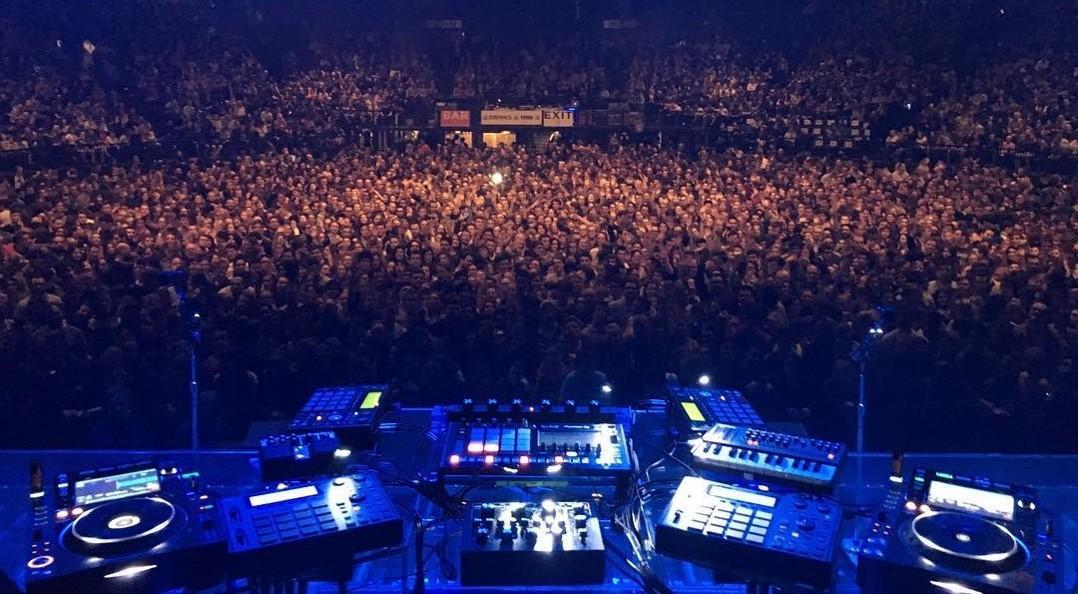
Perfectly on time at 3am, Eulberg appeared on stage and after some subtle, fade out of Nicki Moreno (who delivered a decent, even if not spectacular minimal techno set at too-low volume), the actual holy mass started. Our priest didn’t waste any time, pushed the tempo and sound volume to new heights and started a kick-ass techno set. The club was decently filled at this time, but luckily there was still enough space to dance. People went crazy, the lights and turbine-ventilation began firing (wind sometimes too strong and chilly), and the DJ and the people were at the same wavelength from the very first beats and baselines, which rarely happens. In his set, Eulberg modestly, but sophistically mixed some of his own music into other tracks, in addition to well-placed changes of speed and rhythm. He got the club dancing within a blink of an eye. It was a pleasant surprise to see that this rather unknown DJ manages to fill a 800-people-club some 300km away from his homebase in Western Germany. I did know that almost everybody in the Netherlands is into techno, but I didn’t know that the music is that popular here as well.


I will certainly come back to this church, as it not only offers a massive sound system, but also a nice mix of people, neither them nor the place being too posh or too fucked-up (in general, I prefer grungy clubs, as they usually are the more exciting ones). One guy even helped me out at the toilet, when I didn’t have cash to pay and a bouncer was already approaching me to make me pay or leave (in a friendly way though). I will certainly bring some coins next time, as well as fresh energy, as this sublime techno-cathedral might manage to make me believe again.


een voorsmaakje van Lingua's Kortfilmfestival

27/02/2017
🖋: 

Een paar dagen nadat de Oscars Los Angeles en de wereld hebben overgenomen, neemt Lingua's Kortfilmfestival 't Stad over. In het Antwerpse stralen studenten op de rode loper van Theater Elckerlyc. Waar de sterren van Hollywood vooral op de best dressed list proberen te belanden, wordt er in Antwerpen enthousiast met elkaar gesproken over het studentenleven. Voor een avond wordt de hele filmelite aan de kant geschoven en geldt als maatstaf maar een ding: liefde voor de film. En zoals over La La Land al talloze recensies werden geschreven, worden nu ook de films van het kortfilmfestival al op voorhand op de proef gesteld.

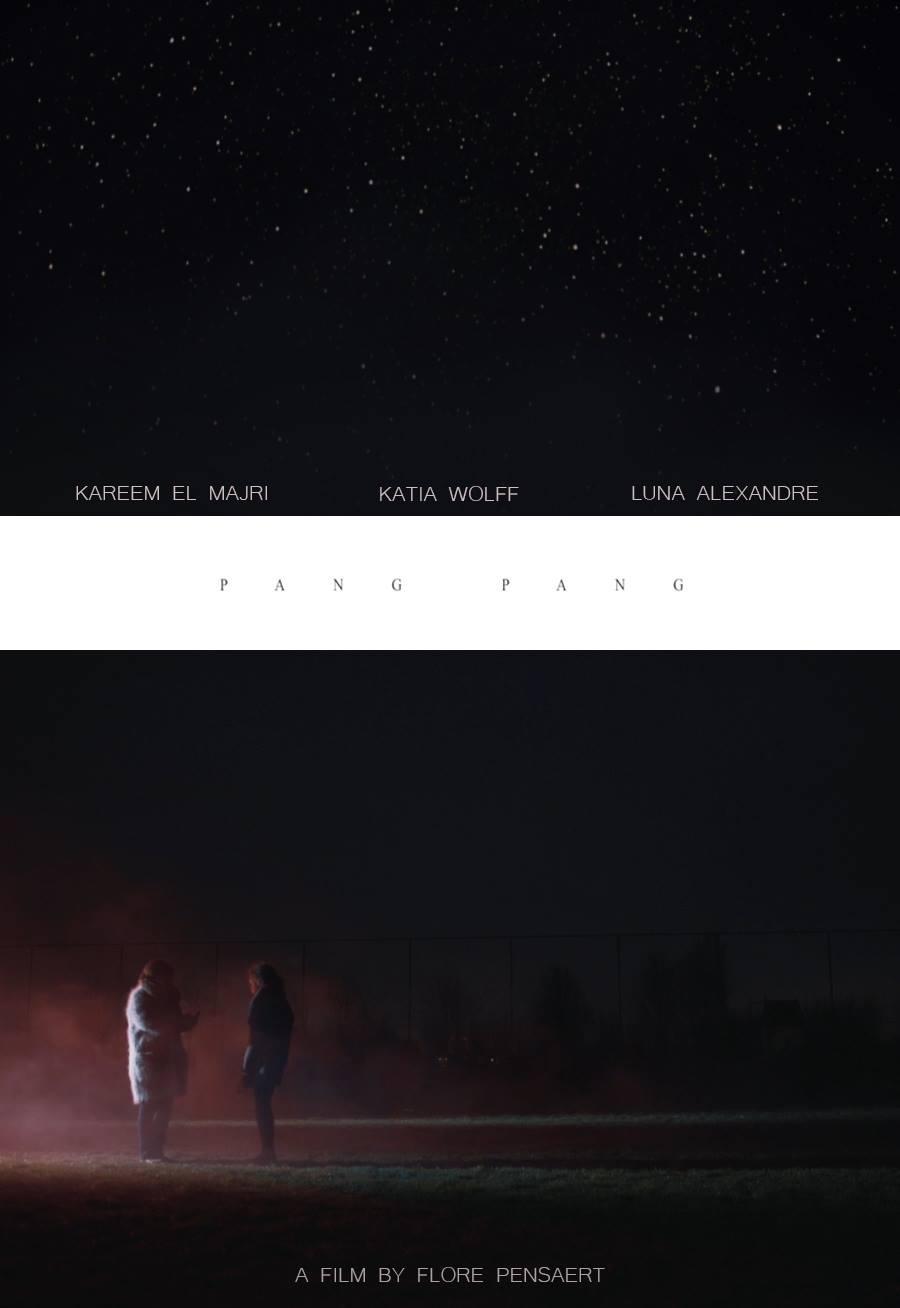
Filmposter Pang PangPang Pang

Ster - volSter - volSter - volSter - volSter - leeg


Regisseur: Flore Pensaert
Duur: 8.11 minuten


Pang Pang is de perfecte opener voor dit festival. De manier waarop de titel verschijnt en het spel met licht en donker zetten de toon voor de rest van de avond. Deze film gaat over een vrouw die terugkijkt op haar leven en denkt: "wat als?" Regisseur Flore studeert film aan het RITCS en dat merk je. Door de mooie framing, kleurkeuze en geluid vergeten we bijna dat het script soms wat stroef in de oren klinkt.


Trailer De Golf

Ster - volSter - halfvolSter - leegSter - leegSter - leeg

Still trailer De Golf

Regisseur: Robin De Stickere
Duur: 2.36 minuten


Deze kortfilm is – zoals de titel al verraadt – een trailer. Voor welke film? Die Welle. Hoewel de edit best goed zit en de typische spanning van een trailer aanwezig is, weten de andere aspecten van deze inzending elkaar niet aan te vullen.


Zvuk

Ster - volSter - volSter - volSter - volSter - vol

Still ZVUK

Regisseur: Ben Verrept
Duur: 6.57 minuten


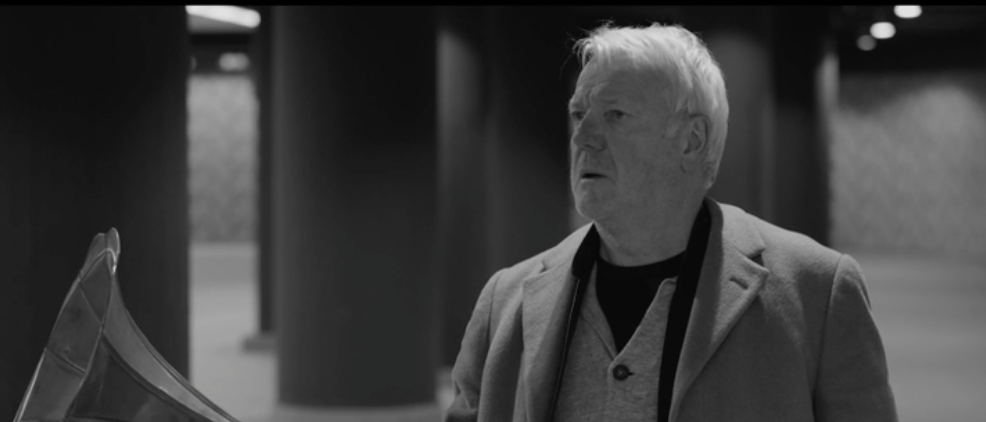
Wauw, hier word je stil van. Zo simpel en toch zo mooi. Dit verhaal wordt vanaf het eerste beeld al duidelijk, zonder dat enige uitleg nodig is. Een dove man zoekt naar geluid, naar muziek in zijn muisstille wereld. De mooie locaties, shots, het prachtige camera- en acteerwerk (Vic De Wachter) vullen elkaar buitengewoon goed aan. Naast narratief dus cinematografisch ook erg sterk.


(P)remise

Ster - volSter - volSter - volSter - leegSter - leeg

Still premise


Regisseur: Mathilde Luijten
Duur: 20.06 minuten


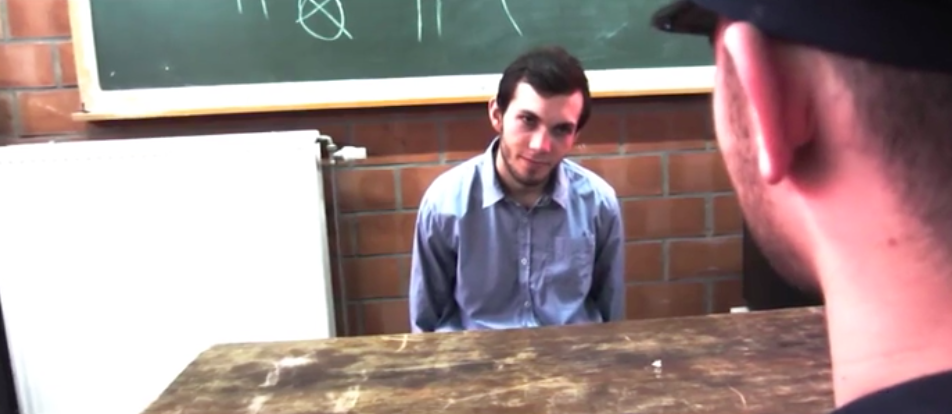
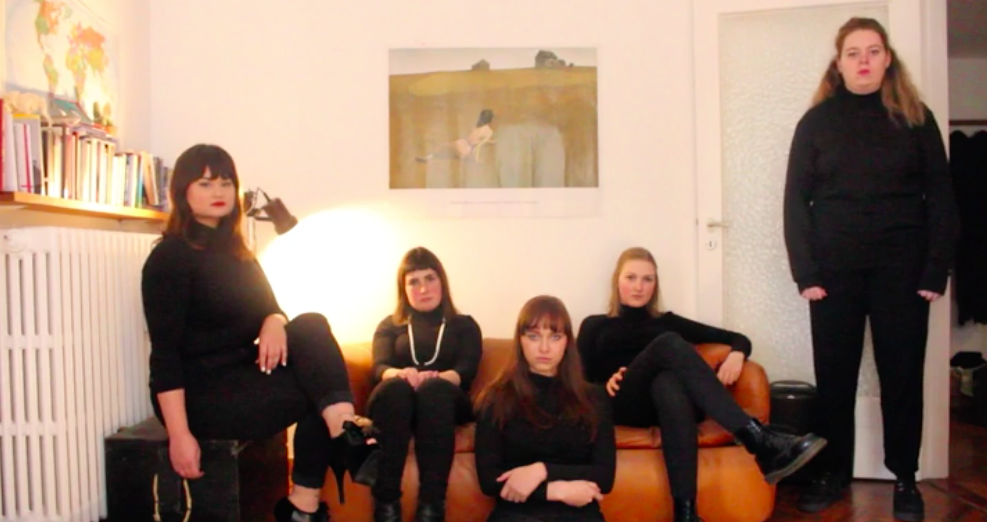
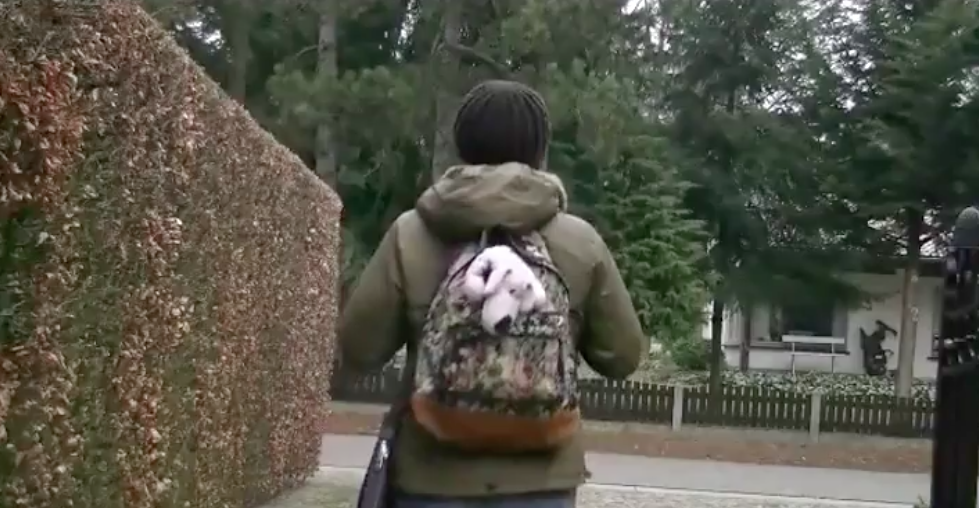
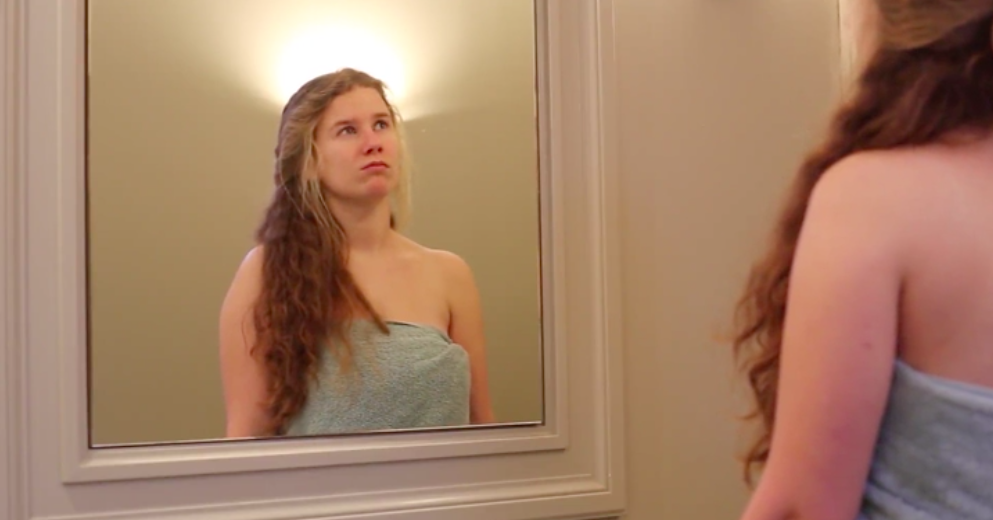
Deze film begint met vijf personages en de vraag is: wie is wie? Vanaf het moment dat je “Hé, pa!” hoort, merk je dat het uiterlijk van deze studentes niets zegt over hun rol en ben je op zoek naar de identiteit van alle personages. Een goed concept met mooie shots (vooral de bed- en badscènes zijn een favoriet), maar toch een tikkeltje te verwarrend. Een hele creatieve manier om met een groep vrienden van dezelfde leeftijd toch een complexer verhaal te kunnen brengen.


Kindness to strangers

Ster - volSter - volSter - leegSter - leegSter - leeg

Still kindness to strangers


Regisseur: Quinten Van Loon
Duur: 9.46 minuten


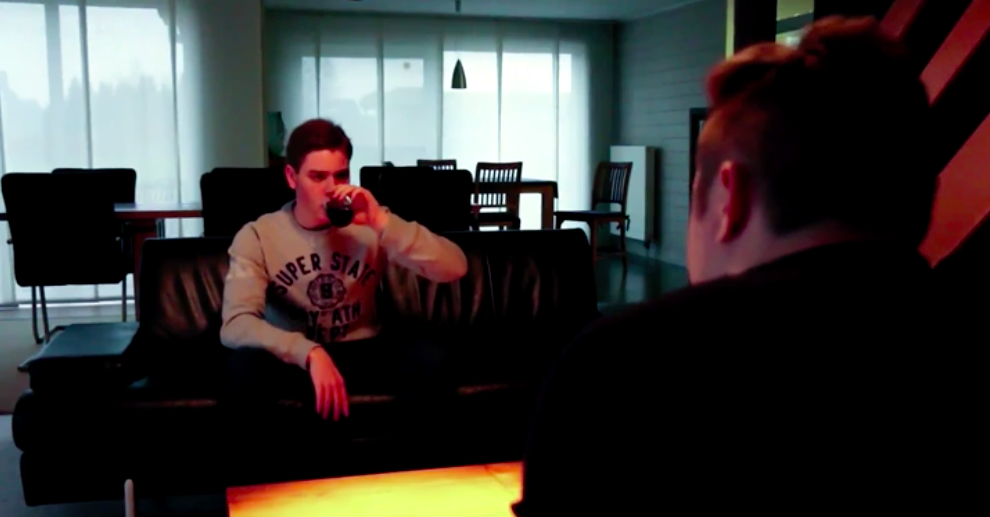
Cola is gevaarlijker dan je denkt. De opzet van deze film volgt het klassieke patroon van een thriller. Een jongen is alleen thuis, er staat een vreemde man voor de deur en wat er dan gebeurt ... is helaas redelijk voorspelbaar. Wel tonen de flashbacks en verschillende shots dat deze jonge filmmaker houdt van film. We zijn benieuwd naar wat de toekomst brengt.


Mon dou dou

Ster - volSter - volSter - volSter - volSter - vol

Still Mon Dou Dou


Regisseur: Nina Broeckx
Duur: 7.39 minuten


Zo anders dan Zvuk (dat ook vijf sterren van ons kreeg), maar zo goed bedacht. Dit is alles wat een studentenkortfilm moet zijn. Nina geeft hier het perfecte voorbeeld van hoe je met minder materiaal ook toffe dingen kan maken. De film eindigt met een plottwist die getuigt van een geweldig gevoel voor humor. Wat begint met een date, draait uit op iets heel anders. Blaffie is the stuff of nightmares!


Dixit

Ster - volSter - volSter - halfvolSter - leegSter - leeg

Still dixit


Regisseur: Lori Tuerlinckx
Duur: 12.30 minuten


De matras des levens, de spaghettisliert des levens, er wordt veel gedacht in deze film. Hij komt langzaam op gang en speelt zich eerst in complete stilte af. Tot het hoofdpersonage op een kantelpunt komt en plots nadenkt over haar leven. Wij waren niet helemaal mee, maar zijn wel fan van de locaties en de schaamteloze spaghettiscène.


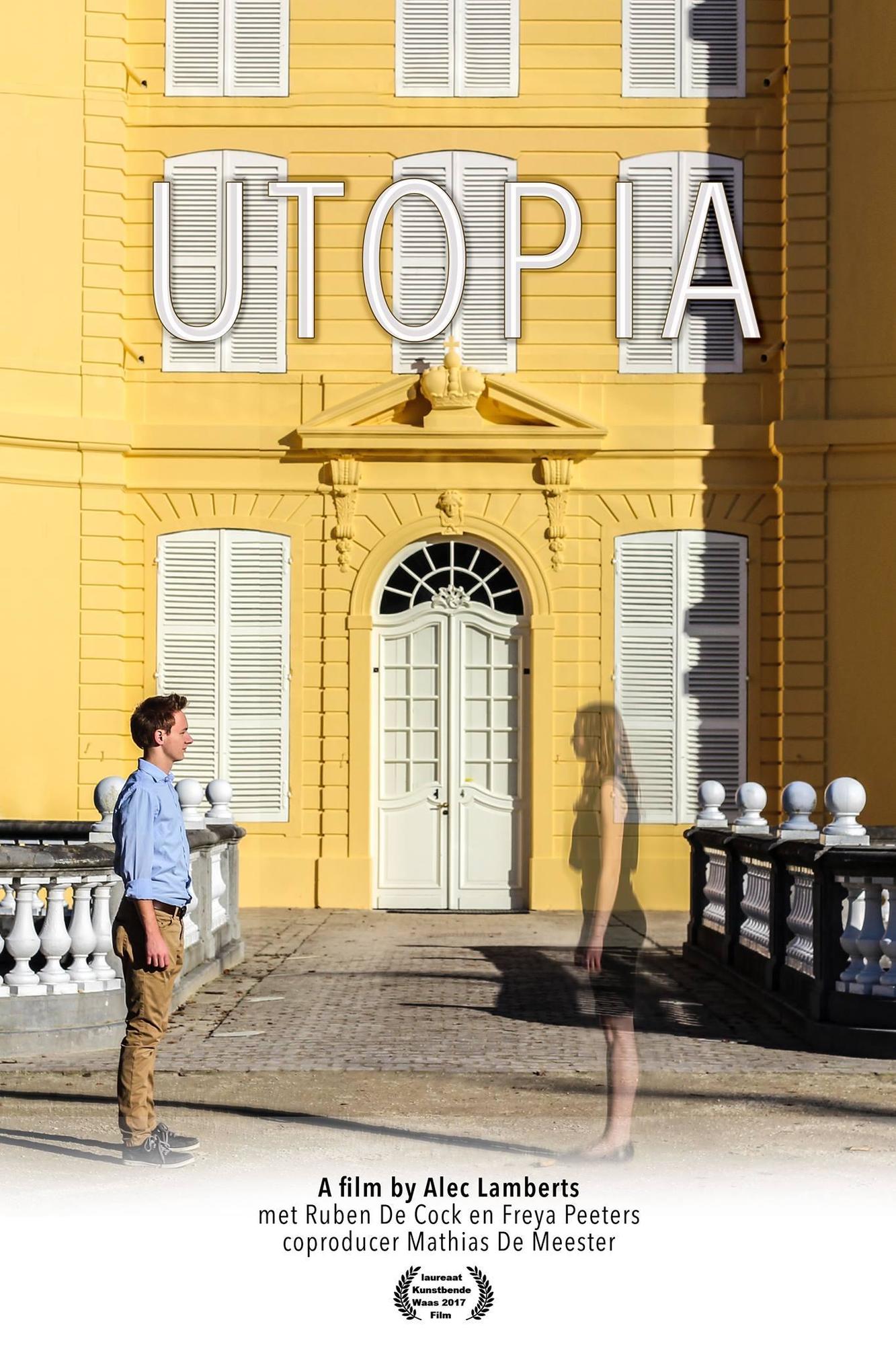
Poster UtopiaUtopia

Ster - volSter - volSter - leegSter - leegSter - leeg


Regisseur: Alec Lamberts
Duur: 4.59 minuten


Een combinatie van film en poëzie, met als favoriete quote "herstellen is in sommige gevallen onbegonnen werk". Het hoofdpersonage wandelt door de natuur, mijmerend over liefde en achtervolgd door haar. Een prima debuut met mooie beelden, maar helaas sloeg deze film toch net de plank mis.


Niet te veel patatjes

Ster - volSter - volSter - volSter - halfvolSter - leeg


Regisseur: Laura MorreelPoster niet te veel patatjes
Duur: 22.46 minuten


Deze film vertelt een verhaal over anorexia vanuit het oogpunt van een familielid. Wat doet deze ziekte met mensen die niet haar slachtoffer zijn? Een combinatie van mooie shots, goede acteerprestaties en een gevoelig onderwerp maken deze kortfilm tot wat hij is. Vooral het acteerwerk van het piepjonge hoofdpersonage (Gloria Piedfort) is indrukwekkend. Helaas duren sommige scènes wat te lang (en andere juist te kort) en valt daardoor de suspense weg. Met een strakkere edit en vloeiendere plotlijn zou deze film haar weg naar ons hart hebben gevonden.


Tip van de redactie

Mon dou dou! We vonden deze film verrassend en vinden dat hij staat voor alles wat dit festival is.


Maar oordeel gerust zelf, bewandel de rode loper op 1 maart en waan je even Ryan Gosling of Emma Stone.


Zijn er alternatieven voor Erasmus?

23/02/2017
🖋: 

Op 16 februari verliep voor heel wat studenten de deadline voor een Erasmusaanvraag. Het uitwisselingsprogramma Erasmus viert dit jaar zijn dertigste verjaardag en is populairder dan ooit. Zo’n 5.325 Vlaamse studenten volgden hiermee vorig academiejaar een deel van hun studies in het buitenland. Toch zijn er ook veel studenten die de deadline missen, geweigerd worden (zie dwars 104) of die Erasmus gewoon niks voor hen vinden. Ook aan deze studenten biedt de Universiteit Antwerpen nog enkele (minder bekende) internationale ervaringen aan.

vrijwilligerswerk of een buitenlandse stage met AIESEC

Als student kan je deelnemen aan een buitenlandse ervaring georganiseerd door AIESEC. Deze internationale studentenvereniging ontstond na de Tweede Wereldoorlog uit een groepje studenten dat wilde streven naar duurzame vrede. Ze geloofden dat toekomstige conflicten konden worden voorkomen als mensen een meer interculturele opvatting kregen. Concreet wilden ze dit bereiken met het organiseren van buitenlandse uitwisselingen om studenten meer in contact te brengen met andere culturen. Inmiddels is AIESEC uitgegroeid tot de grootste internationale studentenvereniging en is zij actief in 126 landen over de hele wereld.


Evelien Nauwelaerts is dit jaar verantwoordelijke voor de AIESEC-uitwisselingen in Antwerpen en gaf meer uitleg over de verschillende projecten. Je kan kiezen om als Global Volunteer voor zes tot acht weken vrijwilligerswerk te doen in het buitenland. Naast het werk is er nog voldoende vrije tijd om samen met de andere vrijwilligers leuke uitstappen te maken om het gastland te ontdekken. Als net afgestudeerde student kan je ook deelnemen aan Global Talent. Dit is een professionele buitenlandse stage die zes tot acht maanden duurt. Hierbij gaat de deelnemer voltijds aan de slag in een internationaal bedrijf en krijgt hij ook een loon uitbetaald. Tot slot bestaat er ook de Global Entrepreneur- uitwisseling, waarbij je werkt bij een professionele buitenlandse start-up. Dit project is onbetaald en duurt zes weken tot drie maanden. Zowel het vrijwilligerswerk als de stages zijn in groepjes van studenten met verschillende nationaliteiten. Op deze manier maak je vrienden van over de hele wereld!


Wil je als vrijwilliger naar China reizen om er in de plaatselijke scholen les te geven over milieuproblematiek? Is het je droom om Hongaarse kinderen op een zomerkamp Engels te leren? Beleef je graag een professionele stage bij PwC in Mexico of werk je liever mee aan een bierapp van een Finse start-up? Dit zijn slechts vier van de meer dan 300.000 buitenlandse projecten die terug te vinden zijn in de database van AIESEC. Elke student kan hier via de website een kijkje in nemen. Als je het project van jouw voorkeur hebt gevonden, kan je hiervoor onmiddellijk appliceren. Voor het vrijwilligerswerk volstaat meestal een kort Skypegesprek of een motivatiefilmpje om toegelaten te worden. Voor de meer professionele stages moet je een diploma en cv voorleggen, wordt er een Skypesollicitatie gehouden en moet je soms nog deelnemen aan testen. De leden van AIESEC in Antwerpen helpen de deelnemer bij het sollicitatiegesprek, het regelen van een visum, een werktoelating, de communicatie met het gastland en andere praktische zaken.


Het voordeel van deze uitwisselingen is dat er steeds een samenwerking bestaat tussen de AIESEC-leden van de verschillende landen. Vanaf het moment dat een uitwisselingsstudent in een ander land aankomt, vangen de lokale AIESEC’ers hem of haar daar op. Ze zorgen voor vervoer vanaf de luchthaven, het verblijf, de maaltijden, een lokale buddy en andere praktische zaken. De prijs die je voor al deze diensten betaalt, ligt tussen 242 en 399 euro. Sommige professionele stages worden door het bedrijf zelf betaald en zijn bijgevolg gratis voor de student. Omdat AIESEC het verblijf regelt en de uitwisseling aan een zo laag mogelijke prijs wil aanbieden, is de verblijfplaats meestal wel basic. Verwacht dus geen luxehotel. Er is wel keuze tussen een verblijf bij een gastgezin of in een residentie of appartement samen met de andere internationale studenten. Een ander voordeel is dat het via AIESEC vaak gemakkelijker is om aan een visum te geraken dankzij hun goede relaties met buitenlandse ambassades.


op inleefreis met USOS

Naast AIESEC biedt ook USOS een unieke internationale ervaring voor studenten aan. USOS is de Universitaire Stichting voor Ontwikkelingssamenwerking van de Universiteit Antwerpen en organiseert jaarlijks twee inleefreizen naar Marokko, Nicaragua en Congo. Deze reizen zijn in samenwerking met de lokale partneruniversiteiten. Per reis vertrekken tien studenten en twee begeleiders voor een maand naar het buitenland. Ze leven bij een gastgezin waardoor ze de plaatselijke cultuur op een authentieke manier leren kennen. Er vinden ook heel wat activiteiten plaats in groep, samen met de studenten van de partneruniversiteit. Een maand lang worden de Antwerpse studenten dus volledig ondergedompeld in een vreemde cultuur.


De inleefreizen vinden plaats in juli en augustus. Om deel te nemen moet je je inschrijven voor de startdag in november. Dit is een verkenningsdag waarop de deelnemers elkaar leren kennen en meer informatie krijgen over de reis. Vervolgens vindt in februari een verplichte vierdaagse plaats waar de studenten worden getraind op interculturaliteit en ontwikkelingsproblematiek. Tot slot is er in juli nog een weekend met de laatste concrete reisvoorbereidingen. Elke deelnemer moet voor het vertrek ook meedoen aan een korte sociale stage in België om te kijken naar armoede in ons eigen land. Tijdens de reis zelf schrijven de studenten een verslag over een observatiethema in overeenstemming met hun studie. Er wordt dus voldoende engagement verwacht van de deelnemers tijdens het voorbereidingstraject. Dat maakt dat deelnemers afhaken. Ook andere vakantieplannen of herexamens leiden hier wel eens toe.


Een van de grote voordelen van de inleefreizen van USOS is dat het een unieke manier is om in een volledig andere cultuur te leven. Dankzij de nauwe contacten met de locals en de aanwezigheid van twee begeleiders van UAntwerpen, is het ook een erg veilige manier van reizen. Een ander pluspunt is de prijs. De deelnemers betalen slechts 250 euro voor de internationale reiskosten en voor een dagelijkse bijdrage aan de gastfamilies. Het vliegticket is hier inbegrepen. Beursstudenten worden vrijgesteld van deze kosten. De activiteiten ter plaatse moeten wel door de student zelf betaald worden. USOS regelt de visumaanvragen en de inentingen bij het Instituut voor Tropische Geneeskunde. Van de deelnemers wordt wel verwacht dat ze flexibel en zelfstandig zijn en dat ze hun plan trekken in het Frans of Spaans.


Lynn Desmedt maakte in de voorbije zomer een inleefreis met USOS naar Congo. “Mijn verblijf daar is zonder twijfel de beste ervaring van heel mijn studententijd”, vertelt ze enthousiast. “Tijdens de eerste week beleefde ik wel een hele grote cultuurshock, maar ik leerde me aanpassen en daarna ging het beter.” Lynn verbleef bij een familie in de stad Bukavu. Met haar gastmama ging ze mee naar de lokale markt, met de Congolese studenten ging ze zwemmen en ze volgde ook een landbouwstage in een klein plattelandsdorpje. “De mensen daar waren heel lief en vriendelijk. Ik heb nu eigenlijk naast mijn eigen familie ook een Congolese familie erbij gekregen. We hebben nog steeds contact en ze vragen al wanneer ik hen terug kom bezoeken”. Dankzij de reis heeft Lynn een nieuwe cultuur ontdekt, veel bijgeleerd en ook een onvergetelijke tijd beleefd.


Duurt zo’n inleefreis of buitenlandse stage wat te lang voor je? De Universiteit Antwerpen organiseert ook nog verschillende summerschools. Dit zijn uitwisselingen met buitenlandse universiteiten voor een kortere periode. Meer informatie vind je bij je eigen faculteit.


de dwarsligger

23/02/2017
🖋: 

The homo sapiens studentus is a special species. Next to the typical activity of studying, the members of this species are known as real lovers of (night)life. But do they have other secrets to unfold? dwars finds out in their natural habitat, the student dorm.

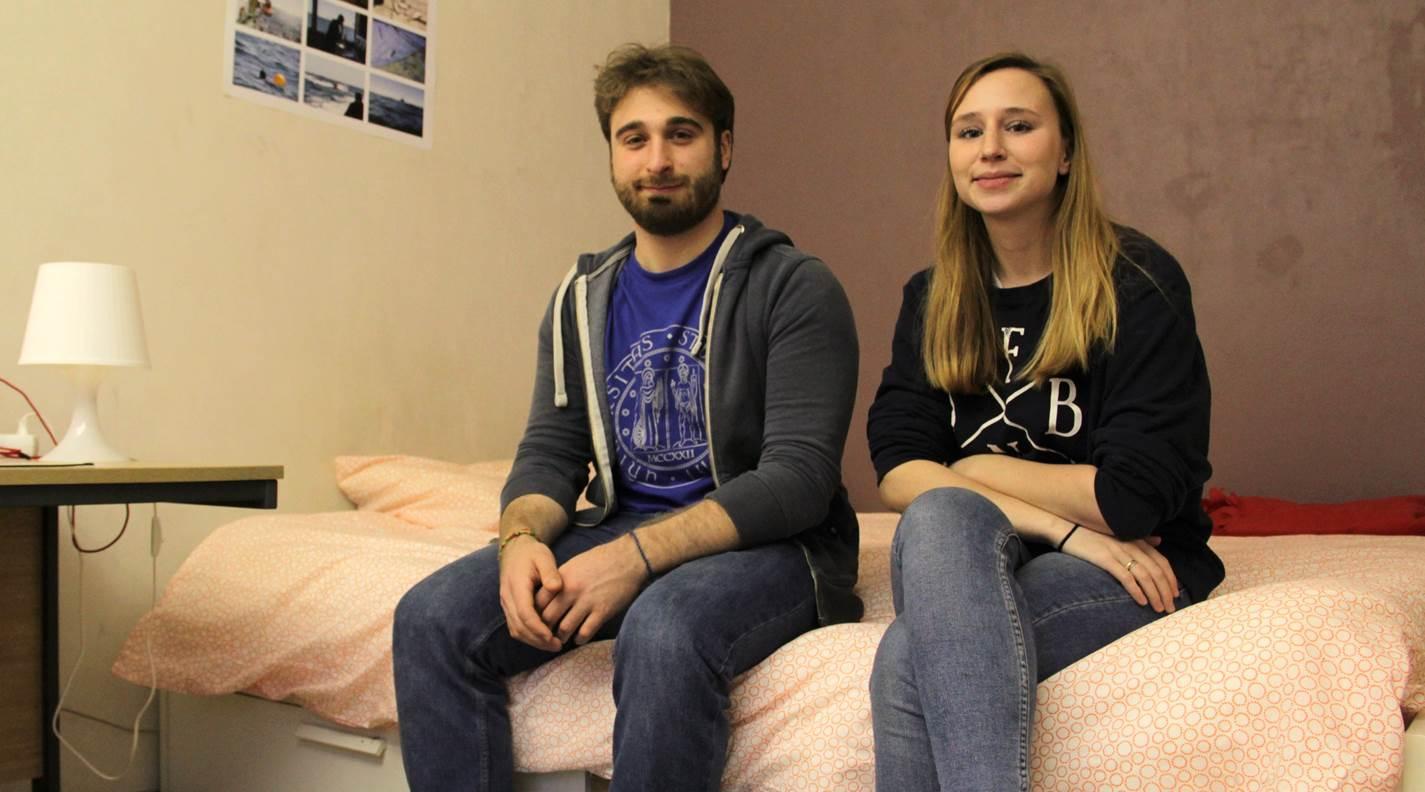
In the cosy Berchem neighborhood, we visit Italian student Enrico, who lives together with three other students in an apartment.


Enrico is currently in his fifth year of Medicine. “In Italy we don’t distinguish between bachelor’s or master’s degrees, we just get our degree at the end of our entire course.” He really wanted to come to Belgium and Antwerp was his first choice. “What I like about the Belgian approach in Medicine, is that it is very clinical in comparison to the rather theoretical way of studying in Italy.”


He would love to specialize in Anesthesiology and he’s thankful he passed the entrance exam in Italy, where more than 5.000 students apply for only 600 vacant places. Just like in Belgium, Medicine is a very serious degree. “There’s a lot of pressure, but we usually help each other out. We take turns in recording the classes and taking notes. It’s competitive but we still work together. It’s a little bit easier to get the maximum score of 30 points in my home country. I passed all my exams here, but no 20/20!”


Enrico does not speak Dutch because he missed the crash course at the start of the year. But he claims English is perfect for his life in Antwerp, as a lot of his friends are Erasmus students. “I’m having a great time here, having dinner, going out with my friends and drinking Belgian beer. Westvleeteren is my favorite, but that’s only for special occasions. Another great thing here are the cantussen. The first time I didn’t go, but every time after that I had a great time with my ESN friends.”


Apart from the nightlife, Enrico enjoys participating in parkour, with the sportsticker. “Don’t think of me jumping from skyscraper to skyscraper. Everybody can exercise at their own level, mine currently being ground level (laughs). It’s just a nice way to see different places in Antwerp.”


Photography and playing guitar keep him busy when he’s alone. “And of course staying in touch with my girl Maria Elena.” They started dating just before he left for Antwerp. “But you know when it’s worthwhile.”


Enrico is from Padova, where his grandmother makes the best tortellini. “I think I’m going to miss Antwerp when I go back home, especially living alone there. But man, that tortellini …”


Rinus Van de Velde

23/02/2017
🖋: 
Auteur

Hij is net vader geworden, heeft tentoonstellingen in Den Haag en Berlijn en is uitgeroepen tot ‘Man van het jaar’ door Knack Focus na zijn immens populaire expositie in het S.M.A.K.: het gaat hard voor kunstenaar Rinus Van de Velde. De 33-jarige kunstenaar is bij de meesten bekend als houtskooltekenaar. Op grote canvassen of rechtstreeks op witte muren maakt hij zwart-wittekeningen die levensgrote proporties aannemen.

Zijn werk bestaat echter uit veel meer dan deze houtskooltekeningen. “Ik vind het altijd jammer als ik als houtskooltekenaar word omschreven.” Ondanks zijn zeer drukke agenda maakt hij op een druilerige woensdagochtend toch tijd voor dwars. De garagepoort van zijn atelier gaat omhoog en we worden direct zijn werkplaats binnengeloodst. “We zullen even aan mijn bureau gaan zitten. Ik neem er snel nog een stoel bij.”


Je bent pas op je zestien beginnen tekenen. Hoe is het toen voor jou allemaal begonnen?

“Zoals elk ander kind tekende ik op jonge leeftijd al, maar ik was er niet bijzonder goed in. In de loop van mijn leven heb ik verschillende bevliegingen gehad, zoals het kopen van een gitaar, bijvoorbeeld. Na een korte tijd had ik echter door dat muziek niets voor mij was. Als puber had ik geen idee wat ik wou gaan doen, zoals alle jongeren van die leeftijd. Wel ben ik altijd een dromer geweest. Een tentoonstelling in Parijs liet in die periode een diepe indruk op me na. Thuis ben ik dan een jaar gewoon zelf beginnen tekenen. Mijn ouders dachten dat dit waarschijnlijk weer één van die bevliegingen was, maar die is duidelijk wél blijven hangen. Voor mijn verdere studies in die branche ben ik vanuit Leuven naar Antwerpen verhuisd om aan Sint Lucas les te volgen.”


Kunst maken moet wel een obsessie zijn.


Waarom koos je ervoor om een studie in Antwerpen te volgen?

“Mijn ASO-opleiding heb ik gevolgd in Leuven, maar mijn hogere studies wilde ik in de kunstsector verderzetten. In Leuven ging dat echter niet. Een logischere stap was een verhuis naar Brussel geweest, maar Antwerpen was – naar mijn gevoel – echter interessanter als het over kunst ging.”

“Een andere factor die misschien wel meespeelde, was dat ik in Antwerpen ook op kot kon gaan. Brussel was dichter bij huis, waardoor op kot gaan minder waarschijnlijk was. Van een echte band met Antwerpen kon je niet spreken, ik was er hoogstens drie keer geweest.”

“De verhuis naar Antwerpen was wel een hele ervaring, want in vergelijking met Leuven is dit echt een grote stad. De band met Antwerpen is nu echter wel aanwezig. Antwerpen is de stad waar ik studeerde, werk, woon en mijn kinderen grootbreng. In het buitenland verkondig ik dat ik uit Antwerpen kom. Het zou me zelfs storen als ze mij zouden omschrijven als ‘de Leuvense kunstenaar Rinus Van de Velde’. Ik besef maar al te goed dat ik voor de mensen hier nooit een echte Antwerpenaar zal zijn. Het zal aan mijn accent liggen (lacht).”


Heb je hier dan meteen je potlood opgepakt?

“Eigenlijk heb ik eerst een opleiding tot beeldhouwer gevolgd. Ik hield van het romantische idee. Het bleek echter niet helemaal mijn ding. Tekenen is wel altijd mijn grote passie gebleven. Op Sint Lucas werd ik gestimuleerd verder te gaan waarmee ik bezig was. Toen deelde ik een atelier met vier medestudenten. Je zag elkaar elke dag aan het werk en leerde daar voortdurend van bij. Na vier jaar samen in dezelfde ruimte te werken, kom je plots op de arbeidsmarkt en in een totaal andere realiteit terecht. Plots sta je er alleen voor.”

“De vraag die ik toen het meeste te horen kreeg, was: ‘Wat ga je met zo’n diploma doen?’ Je hoopt natuurlijk altijd om je eigen werk te kunnen maken, maar dat is uiteraard niet voor iedereen weggelegd. Er zijn collega’s die als assistent bij andere kunstenaars gaan werken; anderen worden bijvoorbeeld curator. De kunstopleiding is meer een vorming. Geen kweekvijver voor een nieuwe hoop ‘kunstenaars’.”


dw107- Rinus Van de Velde (4).jpg


Jouw eigen werk sloeg snel aan, niet?

“Zelf zou ik het niet als snel omschrijven. Ik ben er meer dan tienduizenden uren aan bezig geweest. Maar pas op, ik vind ook zeker niet dat het te traag gaat. Ik ben eigenlijk gewoon zeer tevreden met hoe het allemaal verlopen is tot hier toe.”

“Wel ben ik vrij jong beginnen exposeren, daar heb je gelijk in. Toch zeker als je het vergelijkt met kunstenaars zoals Michaël Borremans of Luc Tuymans. Zij braken pas door rond hun veertigste. Ik heb waarschijnlijk erg veel geluk gehad. Rond mijn afstudeertijd ontstond immers de trend om ‘nieuwe jonge kunstenaars’ te ontdekken. Dat is vandaag nog steeds het geval, en maar goed ook. De generatie kunstenaars van de toekomst zijn de jongeren van nu.”


Kon je vanaf het begin goed rondkomen? Of is het financieel moeilijk als kunstenaar?

“Aanvankelijk kan je niet van je beroep leven, nee. Gelukkig zijn er allerlei mogelijkheden en kan je subsidies of een kunstenaarsstatuut aanvragen.”

“Zelf heb ik een tijd gewerkt als decorbouwer. Zo was ik een periode op tour, waarna ik een periode vrij was. Met het geld dat ik toen verdiende, kon ik dan zelf aan de slag gaan. Ook was ik een tijd leerkracht aan Sint Lucas. Mijn lessen kon ik combineren met het maken van eigen werk.”


“Lesgeven doe ik ondertussen niet meer. De ideologie in een school kan immers het gevaar met zich meebrengen dat studenten beginnen denken: ‘Zo moet ik werken.’ Maar ik wil niet zeggen hoe iemand moet tekenen. Waarom zou ik mijn manier van tekenen aan iemand opleggen? Ik ben ervan overtuigd dat je eigenheid behouden zeer belangrijk is. Wat niet wil zeggen dat je origineel moet zijn. Dat is iets helemaal anders. Wel geef ik elk jaar nog een masterclass aan Sint Lucas. Studenten kunnen dan kiezen bij wie ze les volgen.”

“Een les tekenen zal je mij nochtans nooit zien geven. Ik neem mijn studenten liever mee naar mijn atelier, tentoonstellingen of een lezing van een curator. Ze moeten zien welke mogelijkheden er allemaal zijn.”


Ik wil af van die term ‘houtskoolkunstenaar’.


Is dat een kritiek op het systeem van het kunstonderwijs? Heb jij dat gemist tijdens je eigen opleiding?

“Nee, zeker niet. Bekijk het als een eigen invulling die ik eraan wil geven. Wel vind ik het beoordelingssysteem soms moeilijk. Tijdens je vierjarige studie word je door een viertal leerkrachten begeleid en beoordeeld. Na je schooltijd zijn er plots duizenden mensen die een mening klaar hebben. In mijn tijd waren de leerkrachten vaak ook enkel leerkrachten. Ik heb geen idee of dat nog steeds zo is, maar ik vind dat wel zeer gek.”

“In Duitsland zijn er bijvoorbeeld professoren die hun studenten slechts enkele momenten in de week zien. Maar die proffen zijn zelf kunstenaars en werken aan eigen projecten. Ook hebben die scholen een eigen atelier, waardoor de studenten de kunstenaar echt aan het werk zien. Professoren aan de universiteit hebben toch ook eigen onderzoeken en brengen toch ook eigen publicaties uit?”


“Tekenen is altijd mijn passie gebleven”, zei je net. Waarom is net tekenen de enige bevlieging die een passie is geworden?

“Ik hou van de lichtheid van het tekenen. Je hebt een blad papier, een potlood en vier nagels nodig en je kan je werk direct maken en tentoonstellen.”

“Zeker als student op een klein kamertje is tekenen veel gemakkelijker dan beeldhouwen. Het snel willen tonen is een drang die ik altijd al heb gehad. Veel kunstenaars streven naar een perfecte expositie, maar in mijn ogen bestaat dat niet.”

“Ik zie een tentoonstelling meer als een mogelijkheid om dingen te testen. Daarna kan ik pas verder werken en aanpassingen maken en evolueren naar de volgende tentoonstelling.”


Ik ben ervan overtuigd dat je eigenheid behouden zeer belangrijk is. Wat niet wilt zeggen dat je origineel moet zijn.


Dat lichte, die snelheid van tekenen, dat was toch allesbehalve het geval bij je tentoonstelling in het S.M.A.K.?

“Dat is waar. Voor die tentoonstelling, Donogoo Tonka, bouwde ik scènes uit een filmscript dat nooit verfilmd is. De bouw van die decors duurde gemakkelijk een maand, waarna we de stukken fotografeerden. Pas dan maakte ik een tekening aan de hand van de foto. Dat was leuk om te doen, maar ik merkte wel dat er iets te overproduced aan was. Ik begon verkrampt te tekenen.”

“Als een foto goed was, vertrouwde ik erop dat de tekening dat ook zou worden. Nu probeer ik terug meer onbevangen te tekenen, in het begin tekende ik met meer lef. Om Picasso te citeren: ‘Ieder kind is een kunstenaar. De moeilijkheid is er een te blijven als we groot zijn.’ Dat kinderlijke, zonder ratio gewoon tekenen en toeval toelaten. Het zijn dingen die ik in mijn werk probeer te krijgen.”

“Fouten toelaten kan heel interessant zijn. Ik kan gerust op een avond naar een werk kijken en het in stukken scheuren als ik niet tevreden ben. Daar leer je ook uit.”


dw107- Rinus Van de Velde (3).jpg


Het valt op dat er naast of onder je tekeningen veel tekst pronkt. Een weloverwogen keuze, of toeval?

“Die tekst is eigenlijk meer voor mezelf. Zo kan ik zelf mijn ideeën over de tekeningen een plaats geven. Veel kunstenaars laten tekst weg, omdat de kijker dan zelf kan bedenken waarover het kan gaan. Zelf doe ik dat liever niet. Ik behoud graag de controle over het onderwerp. Bovendien kan je met taal nog een hele extra dimensie scheppen. Een die je niet met beelden kan overbrengen. Of de mensen die tekst nu lezen of niet, houdt mij niet echt bezig.”


De generatie kunstenaars van de toekomst zijn de jongeren van nu.


Ook met keramiek hou je je tegenwoordig bezig. Je beperkt je niet meer alleen tot houtskooltekeningen. Was je het beu om enkel te tekenen?

“Beu niet, maar zoals ik eerder al zei, ben ik altijd een dromer geweest. Dat maakt dat ik me vaak probeer in te beelden hoe het zou zijn om iemand anders te zijn. Dat kan ik aan de hand van mijn werk. Mijn atelier, die ruimte binnen vier muren, is vrij saai. Nu is mijn atelier opgedeeld in twee delen: in de ene ruimte werk ik als Rinus Van de Velde, in de andere maak ik keramiek en schilderijen als Robert Rino. Hij woont in een fictieve kunstenaarskolonie. Mijn werken als Robert Rino bevatten veel kleur. Lang had ik daar niets mee gedaan, maar ik wil af van die term ‘houtskoolkunstenaar’.”

“Die spanning tussen de echte wereld en het fictieve vind ik fascinerend. Ik probeer echter nooit iemand op het verkeerde been te zetten. Iedereen weet dat Robert Rino gewoon Rinus Van de Velde is. Een fictief personage dat kunstwerken exposeert, is bovendien eens iets anders. Ik kijk veel naar andere kunstenaars. Uit die nieuwsgierigheid naar anderen ontstaan bij mij veel alter ego’s.”


Heb je tot slot nog tips voor jonge kunstenaar-studenten?

“Dat vind ik moeilijk. Ik zei eerder al dat ik niet wil preken hoe het moet. Kunst maken moet wel een obsessie zijn. Je moet er echt voor de volle honderd procent voor gaan. Verder is individualiteit zeer belangrijk. Het doen van je eigen ding. Je hoeft dus niet ineens met iets super origineels af te komen, maar wel met iets dat volledig je eigenheid weergeeft. Voor de rest heb ik geen gouden tips. Vroeger kwam me eens ter ore dat je minstens zestien uur per dag moet werken, wil je het maken als kunstenaar. Daar geloof ik niet in. Moeten werken en jezelf moeten uitputten om gewoon te werken is compleet belachelijk.”


Rinus Van de Velde exposeert vanaf 17 maart in de König Galerie in Berlijn. Vanaf 7 september is hij te zien in de Tim Van Laere Gallery in Antwerpen.